


Læringer på tværs af Øresund: “Vi ligner ikke hinanden så meget, som vi tror”
På projektets sidste fysiske fællesmøde var der bred enighed om de dansk-svenske forskelle. Stemningen var præget af spænding forud for de første resultater, og slutspurten blev officielt skudt i gang.
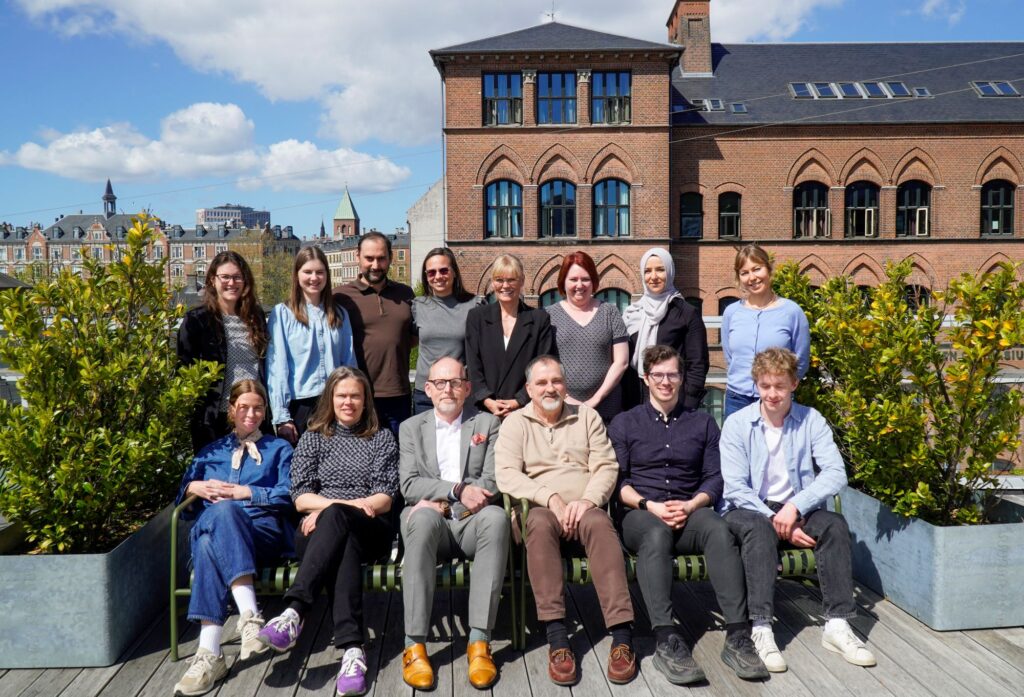
On 5 May 2026, DGI Byen in Copenhagen provided the setting for the final joint meeting of the SUSUES project, bringing together project participants from both Denmark and Sweden. The day featured presentations of the project’s initial results, inspiring guest speaker, and a joint brainstorming session on how the project’s unique findings can best inspire the wider healthcare sector.
The SUSUES project aims to encourage more informed decision-making – and hopefully pave the way for similar analyses elsewhere in the healthcare system.
Participants were highly enthusiastic about the insights gained through the project. Surprisingly, the project revealed significant differences in how data, legal frameworks and day-to-day workflows are managed across otherwise similar clinical departments and neighbouring countries.
The project has come a long way and is now preparing for its closing conference and the dissemination of its results.
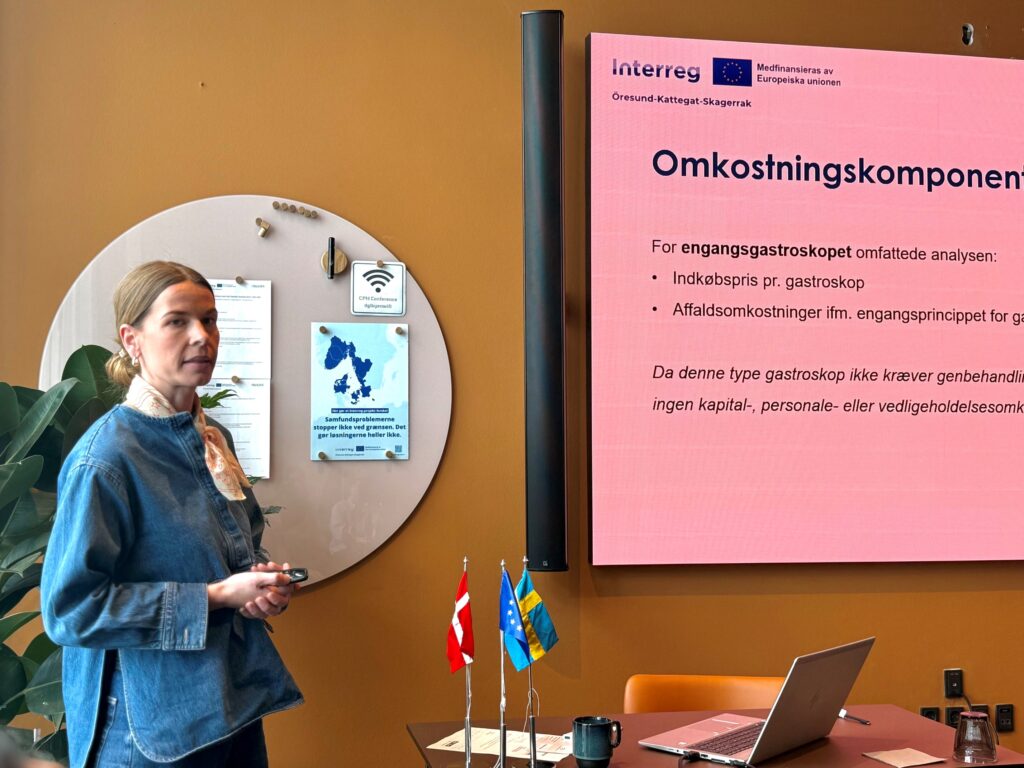
In a healthcare system under increasing pressure, a stronger evidence base for decision-making is crucial. Health economic analyses play a key role in decisions about the choice of technologies and medical equipment, taking both cost and effectiveness into account. The first results from the health economic analysis in the SUSUES project were presented by health economist Catherina Wilckens.
The results are not yet being disclosed, but what makes the project particularly distinctive is that its experts are assessing clinical equipment across four dimensions, creating a holistic perspective that encompasses clinical quality, user experience, health economics, and climate and environmental impact.
A 360-Degree Analysis of Clinical Equipment
The SUSUES project stands out by assessing sustainability across four dimensions rather than focusing solely on the environmental aspects and carbon emissions. All four areas were presented during the day:
- Environment: The latest data from life cycle assessments (LCA)
- Clinical: Results from the clinical trials at Zealand University Hospital (SUH) and Norrland University Hospital in Umeå.
- User experience: Qualitative insights into staff members’ everyday experiences and attitudes towards the equipment
- Health economics: Calculations of the economic consequences of choosing single-use versus reusable endoscopes.
During the afternoon group sessions, participants discussed the potential of the project’s methodological approach. Several important learnings were highlighted, including the realistic evidence base for decision-making that has been developed through the project. By examining clinical equipment from four different perspectives, the project provides a more holistic and accurate picture of what a change entails and requires.
Inspiration fra de grønne koordinatorer
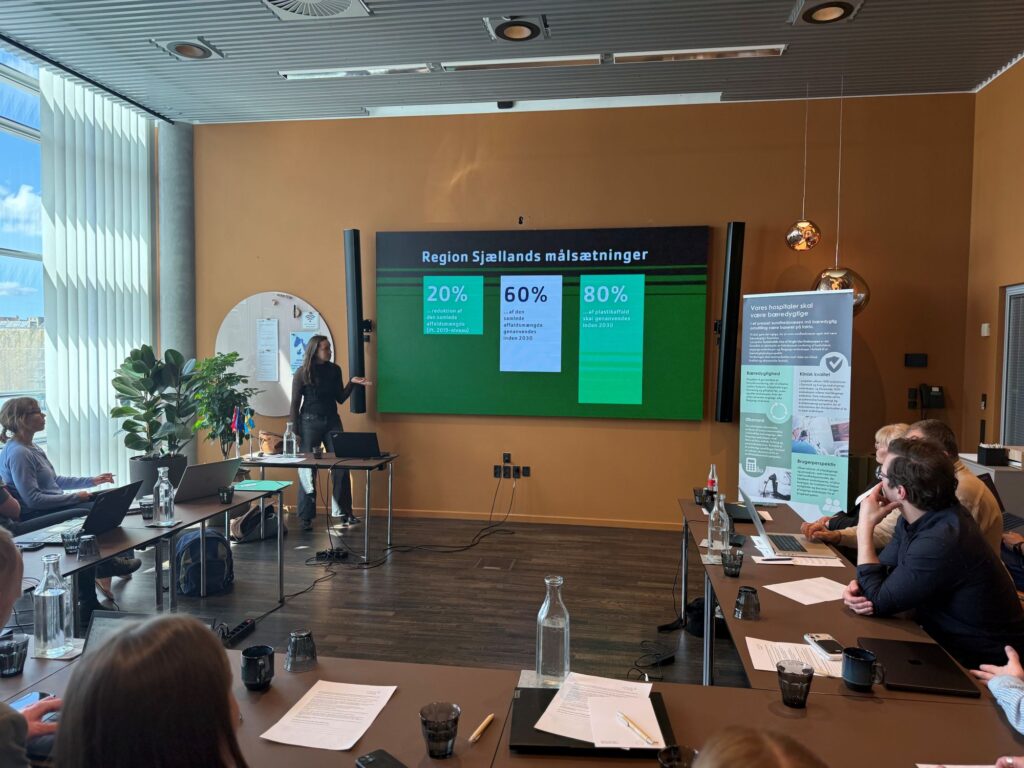
Som en del af programmet var det denne gang den grønne koordinator på dansk side, Mathilde Smith Johnson fra Sjællands Universitetshospital, der delte ud af sine erfaringer og gav et indblik i hospitalets 27 konkrete bæredygtighedsindsatser.
Hendes oplæg understregede, at grøn omstilling kræver både retning, handling og en stærk lokal forankring for at skabe reelle forandringer i en travl klinisk hverdag
The project is now in its final phase, with intensive work underway on several project deliverables, including inspirational materials and the dissemination of the project’s results.