

Green Transition Through Collaboration
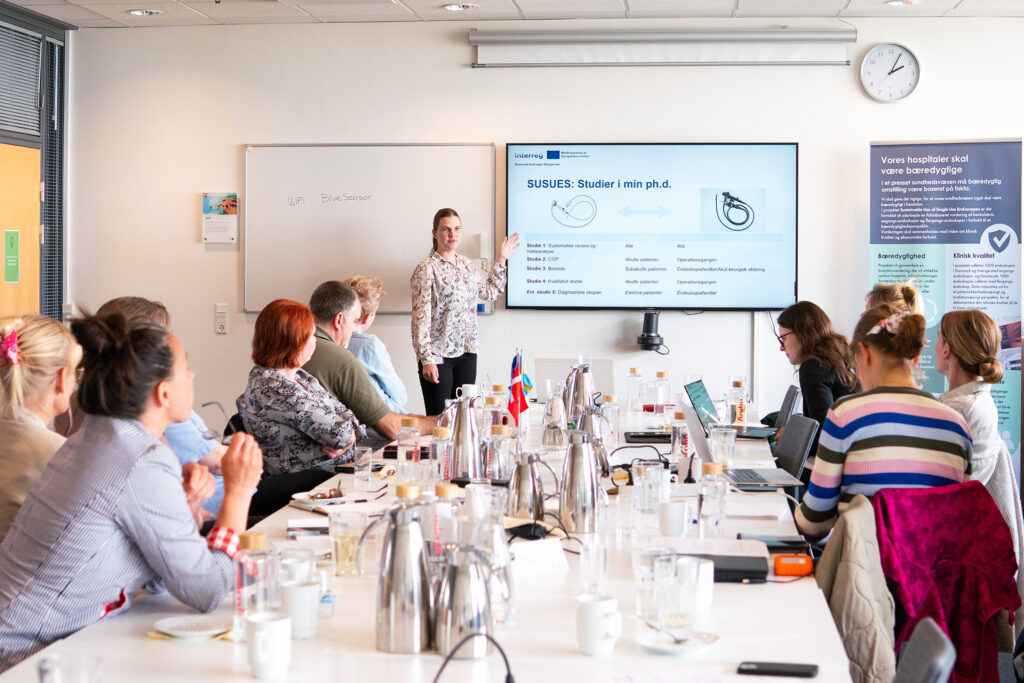
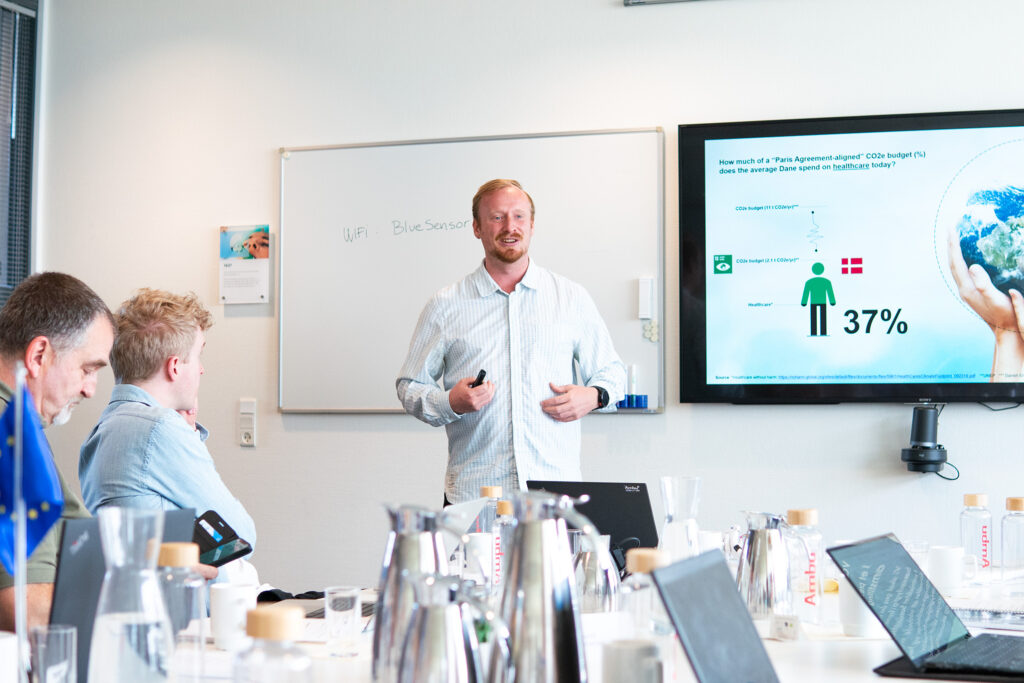
SUSUES invited the project’s circular network group to take part in the biannual joint meeting. The network challenges and quality-assures the project and also contributes knowledge and professional input through presentations and discussion.
Green Transition Through Collaboration
In the SUSUES project, we work towards a greener and more sustainable everyday practice in healthcare through data and knowledge. This is a shared responsibility, which is why we collaborate with companies and organisations that have expertise and experience in areas such as production, waste management, materials, and climate impact.
An important part of this effort is the circular network, where the project team meets with companies, organisations, and experts who provide knowledge and guidance. The network is continually invited to join joint meetings, give presentations, and contribute their perspectives to the project’s work.
Joint Meeting with a Focus on Sharing Knowledge
One example of this collaboration took place on a Monday in May, when project partners and members of the circular network met in facilities provided by Ambu A/S. Ambu develops and manufactures the single-use endoscope and participates actively in the network as a specialist, particularly in the production phase of the endoscope’s lifecycle – covering not only how the product is made, but also considerations for its disposal in the future.
Experts from the Regional Unit for Green Transition (Region Zealand) also attended the meeting, contributing knowledge on how the region works strategically to reduce CO₂ emissions and make the healthcare system more climate-friendly.
Network Encourages Learning from Each Other
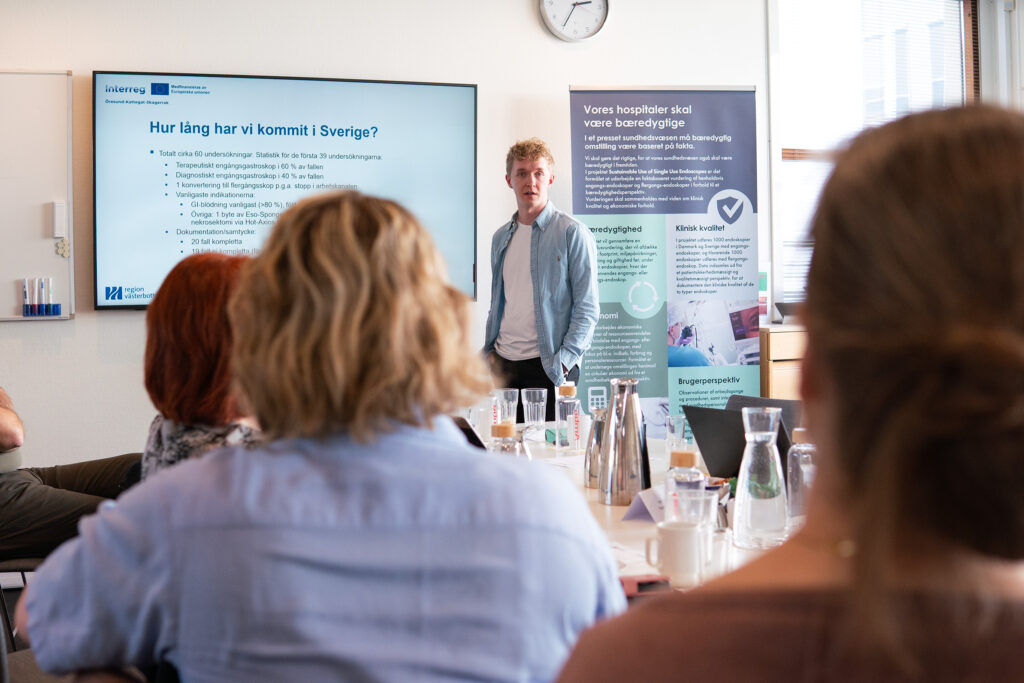
The first part of the meeting was dedicated to knowledge sharing. Ambu A/S provided participants with insight into their work and considerations regarding sustainable production, distribution, and disposal – knowledge that helps contextualise the project’s studies and ensures a better understanding of the product’s entire journey, from the factory to disposal.
This was followed by a presentation from the Regional Unit for Green Transition (Region Zealand) on the region-wide climate strategy, which aims to reduce CO₂ emissions from all hospitals by 50% by 2035. The strategy serves as a benchmark, enabling the project to align its efforts and create synergy across organisations.
The unit also explained how the regions in Denmark handle clinical risk waste. Around 10% of all hospital waste is classified as clinical risk waste, which can be difficult to recycle because it has been in contact with infectious bacteria.
During the presentation, it became clear that the regions have different sorting practices, with varying approaches to handling items such as empty pill bottles and blood bags.
The management of clinical risk waste has a major impact on which parts of a single-use endoscope can be reused, and therefore on how the product can participate in a circular economy. If parts of the equipment can be reused, this directly affects the product’s carbon footprint – a key focus of the SUSUES project’s analyses.
A Network Bringing Value to All
Through the circular network, the project team gains access to experts who can enhance the project’s efforts and provide new perspectives. In return, network participants gain insight into the project’s results and recommendations – with potential for broad application in other organisations and contexts.
In this way, the green transition becomes a shared effort, where everyone contributes – and everyone benefits from the cross-sector collaboration and network, in which both knowledge and responsibility are shared.
The circular network consists of the following participants:
-
Ambu A/S
-
STENA Recycling
-
Regional Unit for Green Transition (Region Zealand)
Læs om netværkets bidrag
Read more

On 1 September 2025, the Department of Surgery at Zealand University Hospital marked the completion of a full year during which single-use endoscopes were used as standard practice.